
Traditional Egg Preservation in Limewater
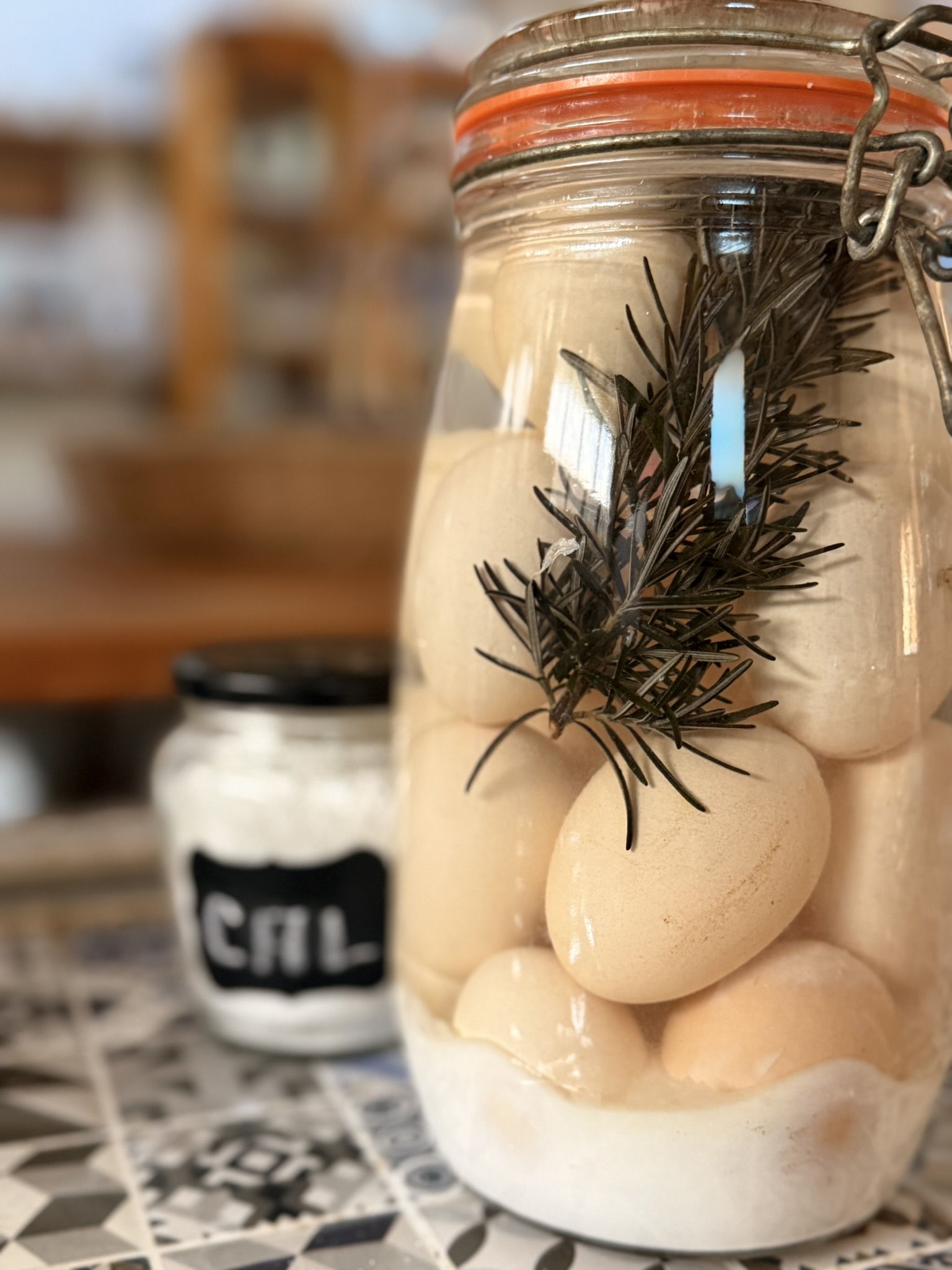
Saving today’s abundance for tomorrow
Introduction
Some gestures connect us to the ancients — their sun-warmed hands, their quiet wisdom. In my rustic Mediterranean kitchen, preserving eggs in limewater is more than a technique: it’s a way to honor time, nourishment, and nature.
This old method, once common in Mallorca and across Mediterranean lands, reminds us that not everything good must be consumed right away. That storing is also a form of care.
A Forgotten Rural Art
Before refrigerators and modern preservatives, our grandparents had their own quiet secrets. One of them: keeping fresh eggs edible for months using a simple limewater bath.
In Mallorca, as in other parts of southern Europe, eggs were gently placed into jars filled with water and quicklime (cal viva), then kept in cool, dark corners of the pantry or cellar. This humble trick meant eggs in the lean seasons when the hens laid less. It was part of the beautiful seasonal rhythm of rural life — storing in times of plenty to soften the harder months.
T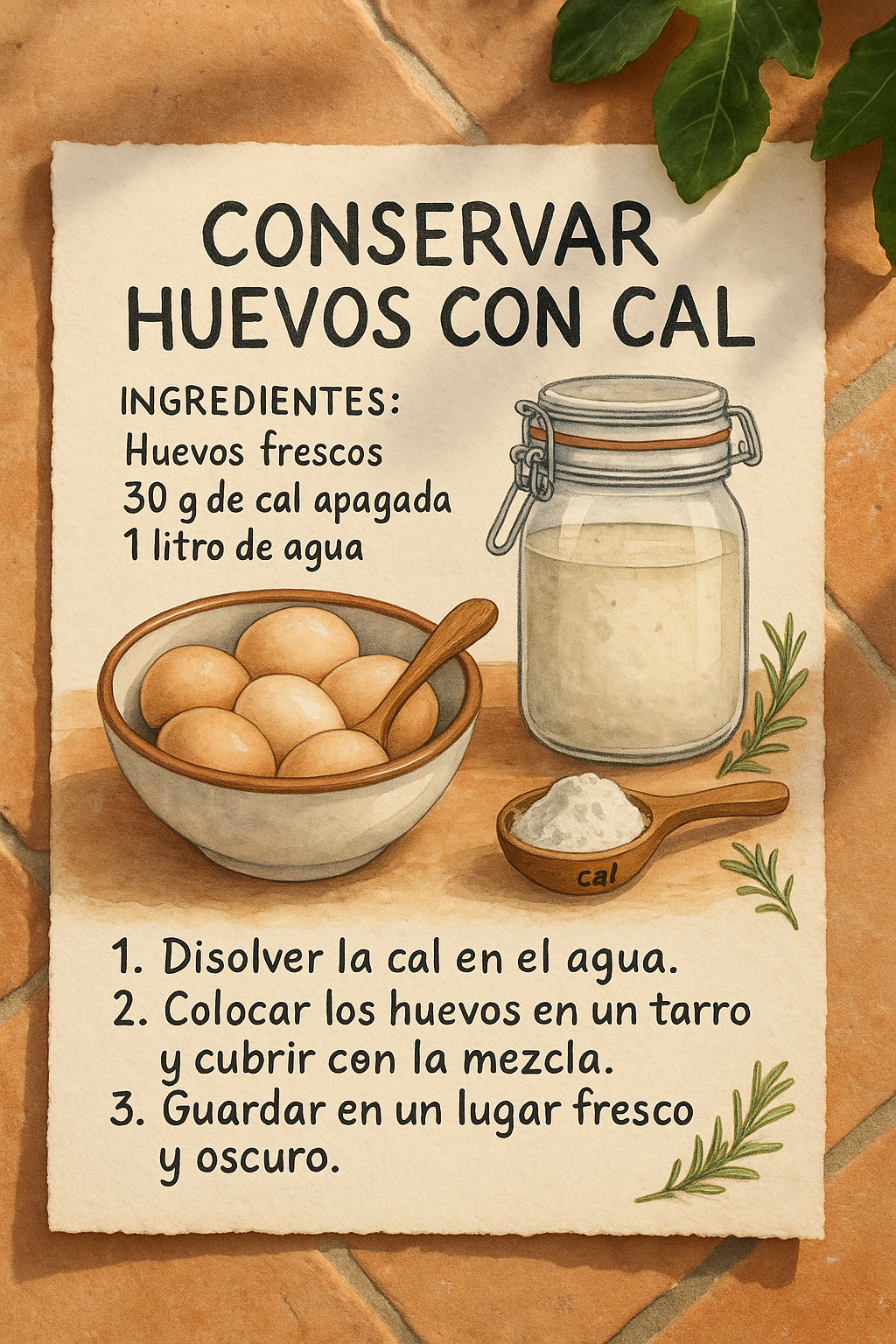 he Traditional Method
Ingredients & Proportions:
-
1 liter of water
-
100 grams of quicklime (cal viva / calcium oxide)
-
Fresh eggs, clean but unwashed
Why “clean but unwashed”?
Washing removes the natural protective coating of the egg, called the bloom or cuticle, which helps prevent bacteria from entering.
However, visible dirt or feathers should be gently brushed off. Choose only sound, whole eggs with clean shells — no cracks.
Instructions:
-
Dissolve the quicklime into the water. Stir well and allow the solution to settle until the water becomes milky but clear on top.
-
Carefully place the eggs into the jar or earthen pot.
-
Make sure all eggs are fully submerged.
-
Store in a cool, dark, dry place.
-
Eggs can last 6 to 12 months using this method.
How Lime Preserves the Eggs
When quicklime is mixed with water, it becomes calcium hydroxide — a highly alkaline solution. This alkalinity:
-
Slightly seals the pores of the eggshell, forming a gentle barrier
-
Inhibits bacterial growth and mold
-
Keeps the inner texture and yolk firmness surprisingly well over time
This is natural food preservation at its best: no plastic, no chemicals, no electricity — just mineral, water, and care.
A Mediterranean Touch — Adding Herbs
In my kitchen, I like to give this tradition a gentle personal twist by slipping a sprig of rosemary, thyme, or a fig leaf into the jar. These herbs not only honor the essence of the Mediterranean garden, but also bring subtle natural aromas into the preservation process.
Historically, herbs have always been part of southern European conservation methods — not just for flavor, but for their antiseptic and protective properties. A nod to the land, woven into every jar.
The Role of Lime in Mediterranean Life
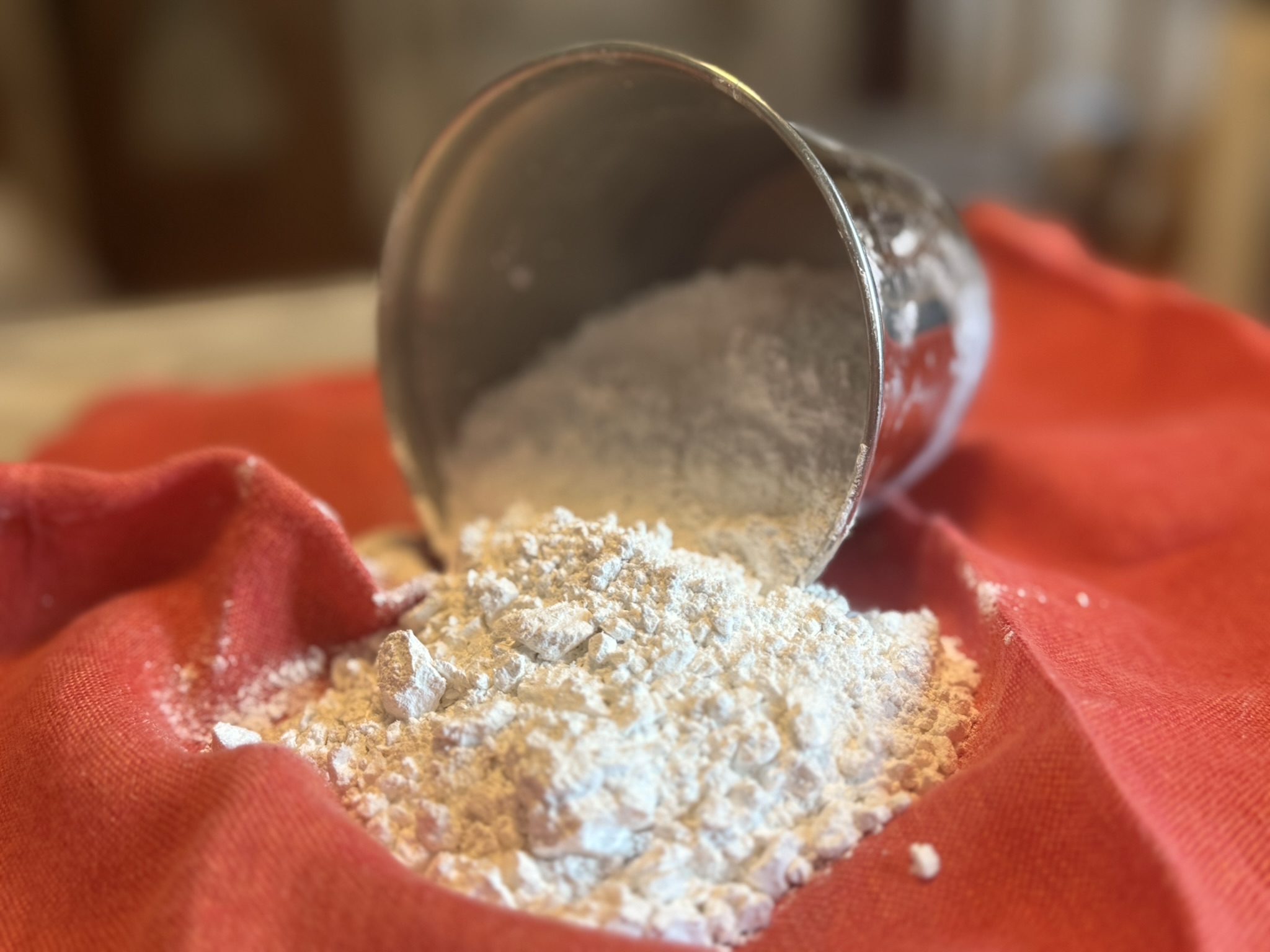
Lime has been used for much more than food. Across the Mediterranean, it played an essential role in everyday life:
-
To whitewash homes, cooling and purifying them
-
To line cisterns and wells
-
In cheese making, olive preservation, and even mortuary rites
-
To disinfect wounds and ward off pests
It was, and still is, a humble mineral that touches architecture, medicine, agriculture, and kitchen alike. Lime is part of our cultural memory — a silent witness to centuries of wisdom.
Conclusion
When we preserve eggs in limewater, we’re not just keeping food.
We are reclaiming an old thread of trust in time, in patience, and in the earth.
It’s a quiet joy to know that with a jar, a few eggs, and a bit of lime, we can keep spring’s bounty long after the season has passed.
Sometimes, the simplest things carry the most soul.