naturalymediterranean
“Saints, Seasons, and Small Blessings: Mediterranean Homesteading”

Dear family and friends,
When people in North America talk about homesteading, they often picture red barns standing tall against endless horizons, fields stretching for miles, and wide skies filled with promise. Here in the Mediterranean, it is different. We don’t even have a true word for homestead in our languages — because this way of life has simply always been here.
I didn’t choose this life as a project. I was born in Canada, yet my roots are woven through this sea — my father from Tunisia, my grandmother from Tuscany, my grandfather from Corsica. Now I live in Mallorca, in the very heart of the Mediterranean. What began as a necessity — living in the countryside — has become my rhythm, a lifestyle rich with history, tradition, and a touch of rustic magic.
On our little acre, apricot and plum trees mingle with young olives, figs, lemons, oranges, and grapefruit. Nísperos and pomegranates cluster by the stone walls, and vines climb where they can. Between them lie a vegetable patch and an herb garden, enough to feed us through the seasons. It is not a farm for selling, but for living.
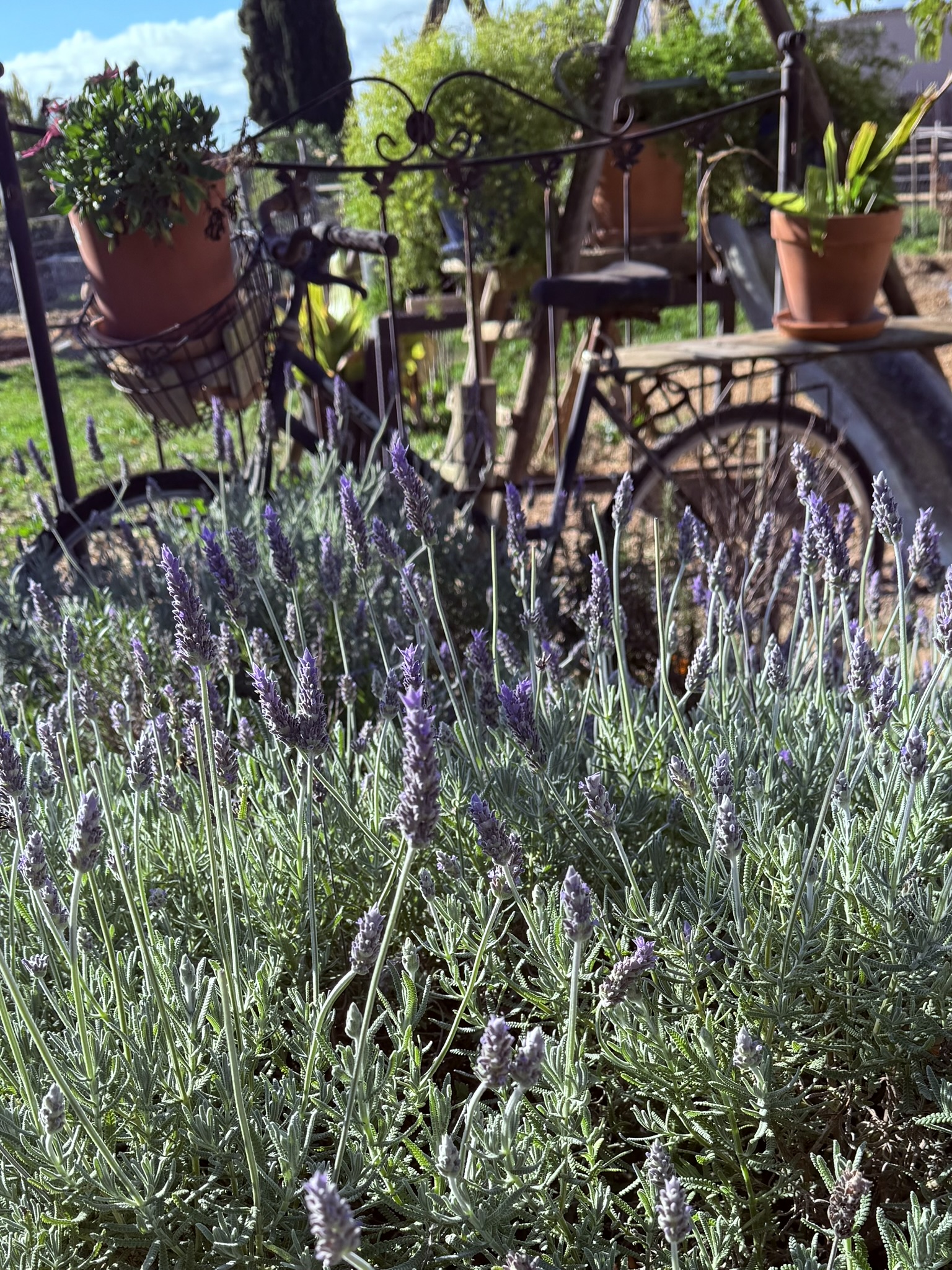
The air itself is alive: lavender and rosemary growing by the paths, woodsmoke curling from the stove where we cook and heat our water, the sweet perfume of orange blossoms in spring, and the salt of the sea carried on the wind. At dusk, goat bells mingle with cicadas, and in the quiet you can hear church bells across the valley, or the soft clucking of hens as they settle for the night.
My mornings begin at the crack of dawn with the rooster’s crow. The free-ranging chickens are the first to greet me, sometimes gathering at the front door like a personal fan club, curious and hopeful for scraps. The ducks waddle after them, chatting among themselves in their comical way. Blanc, our old white horse, walks slowly to his stable, steady and wise, never in a hurry. Bernard, the donkey, is the opposite — playful and mischievous, always looking for something to tug, push, or climb. The goats — Daniela, Fe, and Sansón — bounce around with youthful energy, playful yet patient as they wait their turn for grain. Miss Piggy, our potbelly pig, snorts happily when she hears the rattle of the feed bucket, while Gordon, our loyal farm dog, patrols the edges of the property, making sure everyone is safe. The kittens weave around my ankles, reminding me that no one should ever be forgotten at breakfast time.
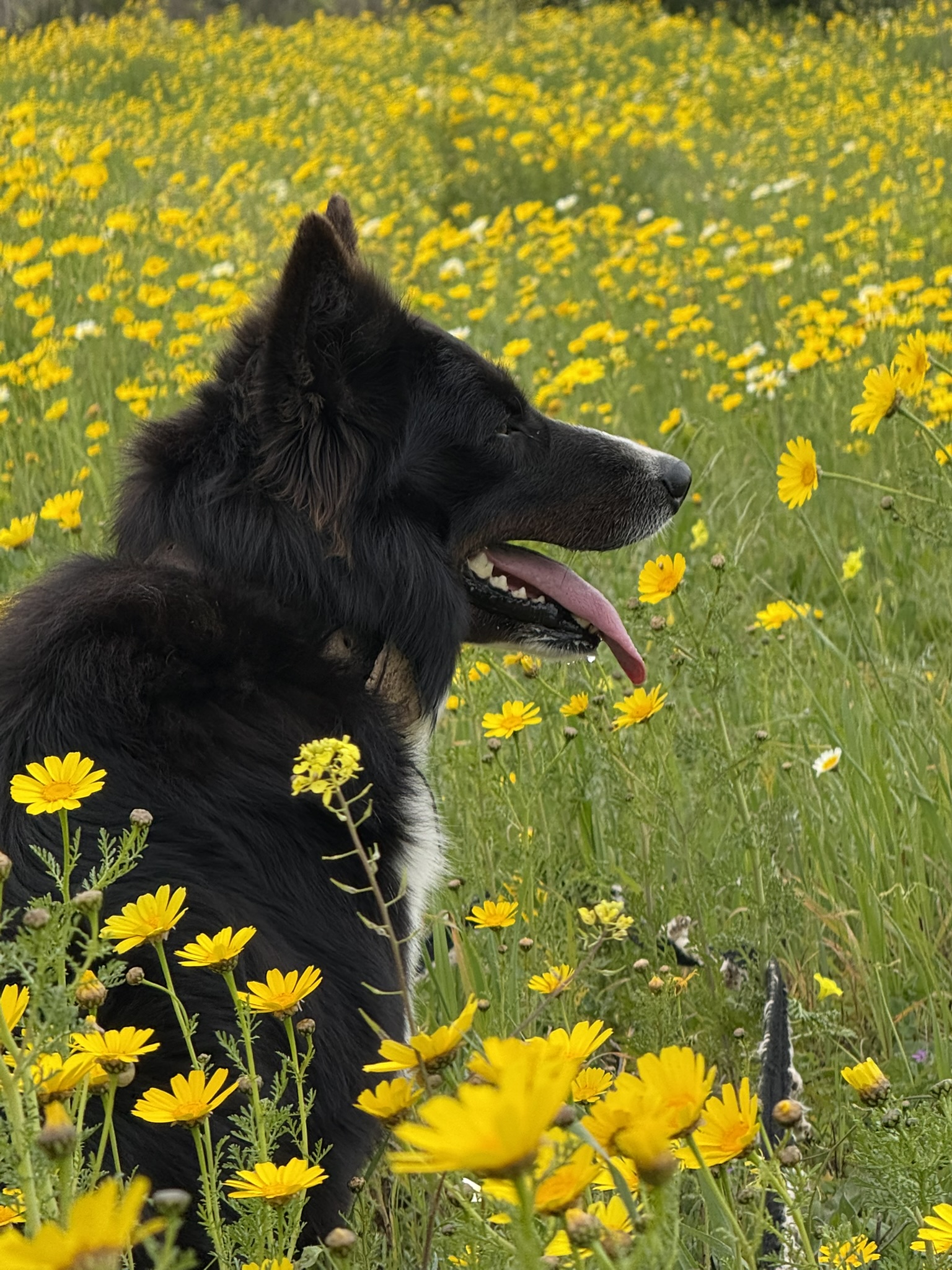
Each animal has its place, its rhythm, its gift. They ask for care, and in return they teach me patience, resilience, and joy.
Life here is guided not just by daylight, but by calendars older than clocks. Farmers still look to the saints’ days to decide when to prune, harvest, or butcher. You may hear someone say “Cada cerdo tiene su San Martín” — every pig has its Saint Martin’s day — meaning the butchering comes in November, as it always has. The moon, too, holds sway: we plant on the waxing moon, prune on the waning, and harvest with the rhythms of the heavens above us.
And then there are the festivals, when the spiritual and the everyday meet. One of the most magical is la fiesta de San Juan Bautista, celebrated on the eve of June 24th. It marks the turning of the summer season, and across villages and cities alike, fires are lit, herbs are gathered, and people leap over flames to purify and protect themselves for the year ahead. Children laugh, elders share stories, and the night carries a mysterious energy that feels both ancient and alive. It is a reminder that here, the seasons are not just practical, but spiritual passages, honored by young and old alike.
Words of wisdom:
“En martes, ni te cases ni te embarques” — on Tuesdays, neither marry nor set sail.
“Hasta el cuarenta de mayo, no te quites el sayo” — until the fortieth of May (June 9), don’t put away your coat.
These proverbs are not superstition so much as memory — ways to keep time, to honor the land, to live with the rhythm of nature and spirit.
In North America, many of you follow a different calendar — one of school years, holidays, and seasons that feel vast and wide. Here, life is measured more intimately: by olives ripening, figs falling, saints’ feasts, and the turning of the moon.
Summer here is not gentle, as it can be in Canada. The sun is fierce, and water is precious. We collect rainwater and store it, or bring it by truck when needed. Our small swimming hole doubles as a reservoir, an anchor in the long dry months. Yet this harshness shapes a beauty unlike anywhere else — silvery olive leaves shimmering in the heat, cactus fruits glowing red, the fragrance of wild thyme and pine released by the sun.
The Mediterranean is one of the world’s Blue Zones, where people live long not because of miracle diets or perfect systems, but because daily life itself is woven with tradition, movement, community, and reverence. Meals are long, family is central, and even hardship is softened by the rituals that tie us to the sacred in the ordinary. Dancing once a week at the community center, long meals with family, laughter around the table — these are not luxuries here, but essentials.
So while my homestead is small compared to the wide lands of Canada or the U.S., it holds the same heart: a desire to live close to the earth, to care for animals and family, to share good food, and to remember that each place has its own blessings.
From the smell of rosemary crushed underfoot to the glow of lanterns on a summer night, I send you a piece of Mediterranean life. May it remind you that every culture, every land, has its own beauty — and each of us, in our own way, are homesteaders of the soul.
With love,
Michele
Blessing of the Land
“You shall eat the fruit of the labor of your hands; you shall be blessed, and it shall be well with you.” — Psalm 128:2